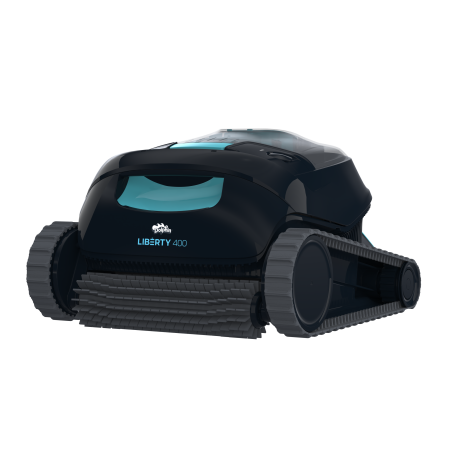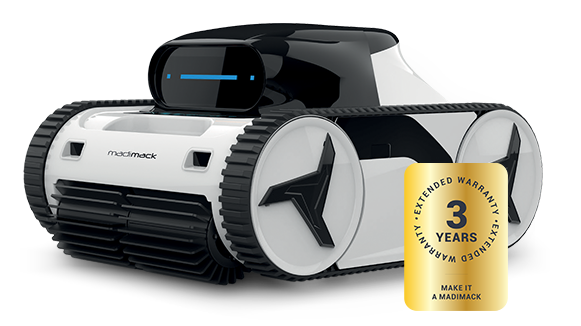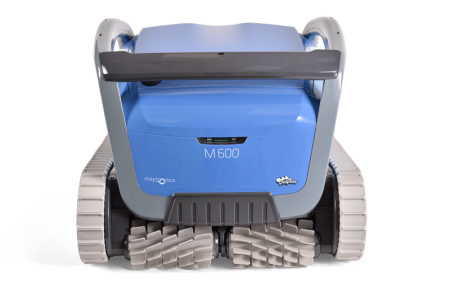
How each type works
A corded robot runs off a floating cable and a poolside power supply. Power is continuous, so the robot can run larger motors, bigger filter baskets and longer cycles without worrying about a battery.
A cordless robot carries its own battery. There is no cable to untangle and nothing to trip over, but the cleaning cycle is limited by charge, and the robot has to surface or dock to recharge.
Where cordless wins
If you clean often, handle the robot yourself, or have a pool with awkward access, cordless is usually the nicer daily experience.
- No cable to twist or trip over around the pool edge
- Faster to deploy — drop it in, press start
- Lighter to lift out for most models
- Good fit for small to mid-size pools with simple shapes
Where corded wins
Longer pools, heavier leaf loads and full waterline scrubbing tend to favour corded models, because uninterrupted power supports stronger pick-up and longer cycles.
- Sustained suction for fine silt and heavy leaf debris
- Longer continuous cycles on large or commercial pools
- Wider range of wall and waterline capable models
- Larger filter capacity on upper-tier models
Practical questions to ask before you buy
Measure the longest run of your pool and check the model is rated for that length. Think about who lifts the robot out — weight matters more than spec sheets suggest. And consider your debris type: fine sand and silt need a finer filter, while gum leaves need volume.
Frequently asked questions
- Do cordless robots clean walls?
- Some do and some are floor-only. Check the specific model — wall and waterline capability is a model-by-model feature, not a cordless-versus-corded rule.
- Is a cordless robot slower?
- Cycle times are usually shorter because they are limited by battery charge. On larger pools that can mean running more than one cycle to cover the whole surface.
- Which lasts longer?
- Both are serviceable. Cordless robots add a battery as a wear part, and corded robots add the cable and power supply. We repair and service both.